

If you’re missing teeth, you’re likely considering your replacement options. Two of the most common solutions are dental implants and dentures. Both can restore your smile, but they differ significantly in comfort, function, and long-term benefits.
If you live in Lakeway, understanding the differences between these options can help you make the best decision for your oral health and lifestyle.
What Are Dental Implants?
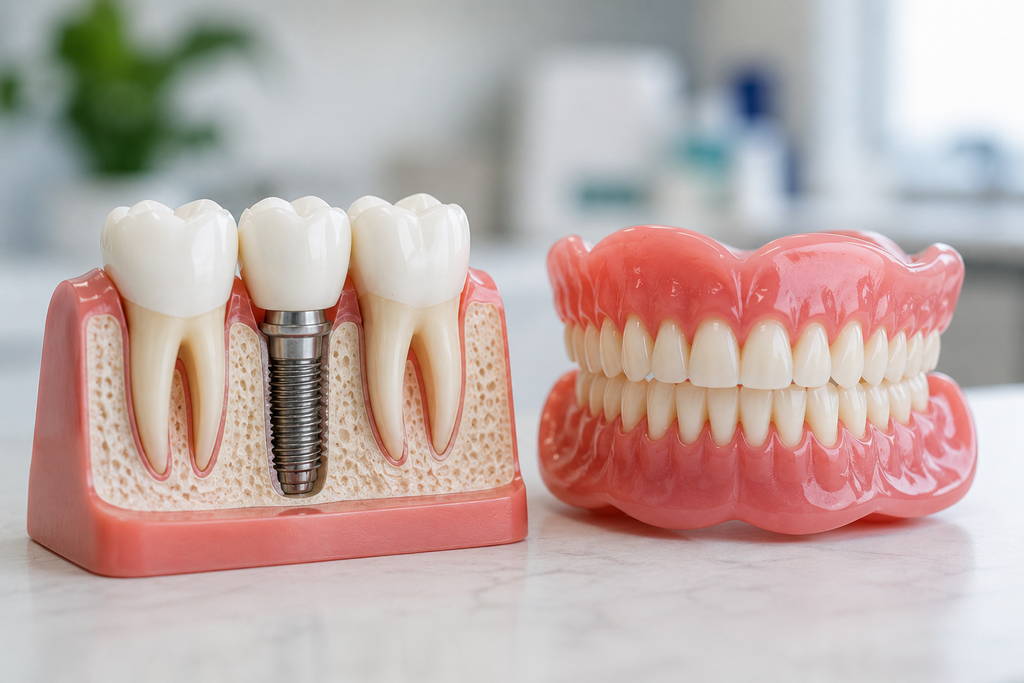
Dental implants are medical grade titanium posts placed in the jawbone to replace missing tooth roots. Once healed, they provide a stable foundation for crowns or bridges that look and function like natural teeth. Learn more about modern dental implant solutions and how they restore both function and appearance.
What Are Dentures?
Dentures are removable appliances designed to replace multiple missing teeth. They sit on top of the gums and are typically supported by suction or adhesives. Modern dentures are more natural-looking than ever, but they function differently than fixed solutions like implants or bridges.
Key Differences Between Implants and Dentures
Understanding how these options compare can help guide your decision:
Stability and Comfort
Dental implants are fixed in place, offering superior stability. Dentures can shift or move, especially when eating or speaking.
Chewing Ability
Implants function like natural teeth, allowing you to eat a wide range of foods. Dentures may limit certain foods and reduce bite strength.
Bone Health
Implants help preserve jawbone density by stimulating the bone. Dentures do not prevent bone loss and may contribute to gradual changes in facial structure.
Maintenance
Implants are cared for like natural teeth with brushing and flossing. Dentures require daily removal, cleaning, and occasional adjustments.
Which Option Is Right for You?
The best choice depends on your goals, oral health, and budget.
Dental implants are often recommended for patients looking for a long-term, low-maintenance solution that closely mimics natural teeth. Dentures may be a more accessible option for patients who prefer a non-surgical approach or need a quicker solution.
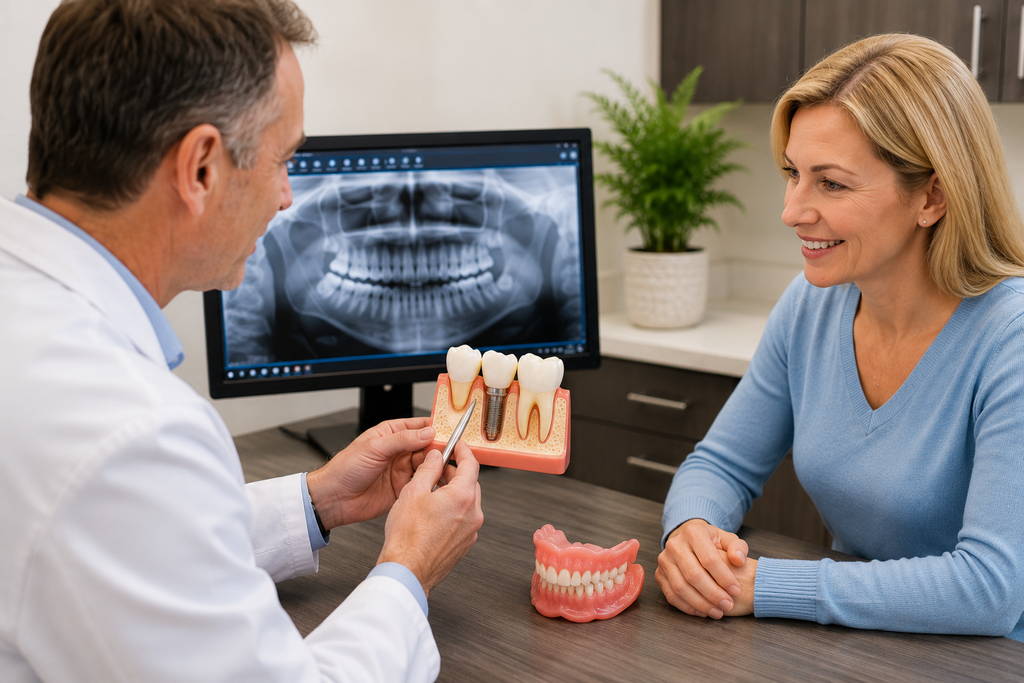
A personalized consultation can help determine which option is the better fit for your situation. Patients exploring dental implants in Spicewood often choose implants for their stability and long-term durability.
Cost Considerations
Cost is an important factor when comparing implants and dentures. Dentures typically have a lower upfront cost, while dental implants require a higher initial investment.
However, implants often provide greater long-term value due to their durability and reduced need for replacement or adjustment. Financing options and long-term care plans can also impact the overall cost of treatment.
Long-Term Benefits of Dental Implants
While dentures can restore appearance, dental implants offer additional long-term advantages:
• Help prevent bone loss
• Maintain facial structure
• Provide a more natural look and feel
• Improve confidence when eating and speaking
Advanced technology such as cone beam CT imaging helps improve implant precision and long-term success.
FAQs
Are dental implants better than dentures for most patients?
Dental implants are often considered the better long-term solution because they provide greater stability and help preserve jawbone health. Unlike dentures, implants function much more like natural teeth and do not require adhesives or daily removal. The best option depends on your oral health, goals, and whether you’re a strong candidate for implant placement.
How much do dental implants cost compared to dentures in Lakeway?
Dental implants usually cost more upfront than dentures, but they often provide greater long-term value due to their durability and longevity. Dentures may require periodic relining, repairs, or replacement over time, which can increase overall costs. A personalized consultation can help determine which option makes the most sense for your needs and budget.
Can you switch from dentures to dental implants later?
Yes, many patients eventually transition from dentures to dental implants after experiencing issues with comfort, fit, or stability. In some cases, bone grafting may be recommended if significant bone loss has occurred over time. Modern implant techniques have made it possible for more patients to qualify for treatment than ever before.
How long do dental implants last compared to dentures?
Dental implants can last decades or even a lifetime when properly maintained with good oral hygiene and regular dental care. Dentures generally need adjustments or replacement every 5–10 years due to wear and changes in the jawbone. This long-term durability is one of the main reasons many patients prefer implants.
Do dental implants feel more natural than dentures?
Dental implants typically feel more natural because they are securely anchored into the jawbone, similar to natural tooth roots. Dentures rest on top of the gums and may shift during eating or speaking, especially over time. Many patients report improved comfort, confidence, and chewing ability after switching to implants.
Final Thoughts
Both dental implants and dentures can restore your smile, but they offer very different experiences. Understanding the benefits of each option can help you make a confident, informed decision.
If you’re considering tooth replacement, a consultation can help determine the best solution for your long-term oral health and lifestyle.
At Serene Hills Dentistry, we help patients in Lakeway, Spicewood, Bee Caves, and the surrounding Lake Travis communities explore personalized tooth replacement options designed for long-term comfort and function.