

LANAP® Laser Gum Disease Treatment
Advanced LANAP® Gum Disease Treatment in Lakeway, TX
If you've been diagnosed with advanced gum disease, told you need periodontal surgery, or are concerned about losing teeth because of bone loss, you may have more treatment options than you realize.
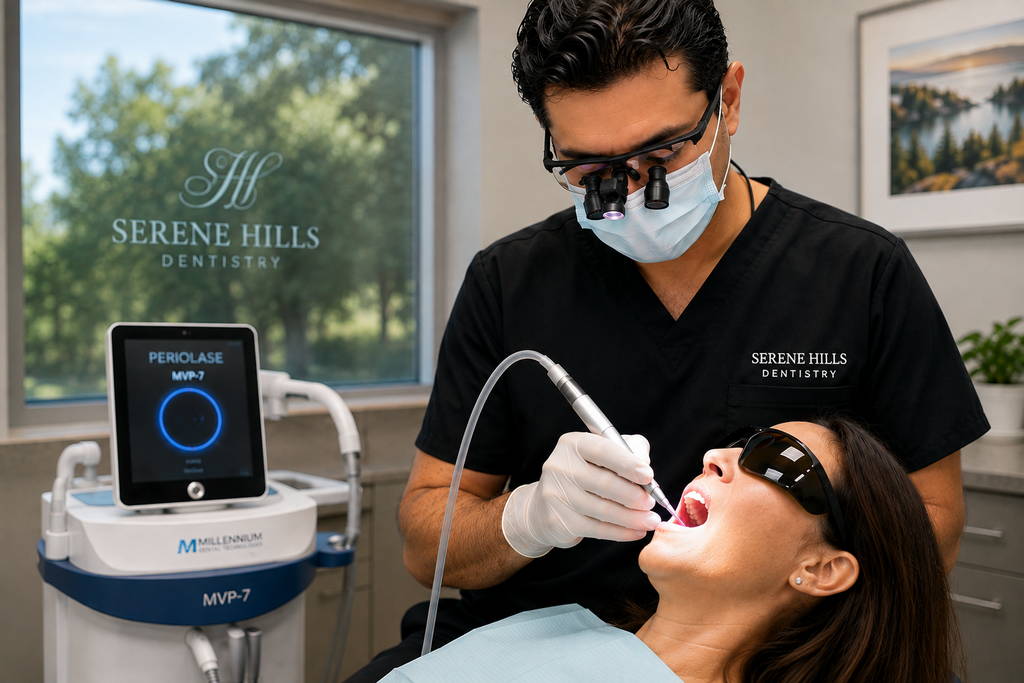
At Serene Hills Dentistry, Dr. Ali Golshani offers the LANAP® (Laser Assisted New Attachment Procedure) Protocol using the PerioLase® MVP-7™. This advanced laser treatment targets the infection associated with periodontal disease while preserving healthy gum tissue and supporting your body's natural healing response.
Unlike traditional periodontal surgery, LANAP does not require scalpels or sutures. For appropriate patients, it provides a minimally invasive approach to treating gum disease while helping preserve the natural teeth and supporting structures whenever possible.
Whenever possible, save natural teeth first. Replace them only when necessary.
What Is Periodontal Disease?
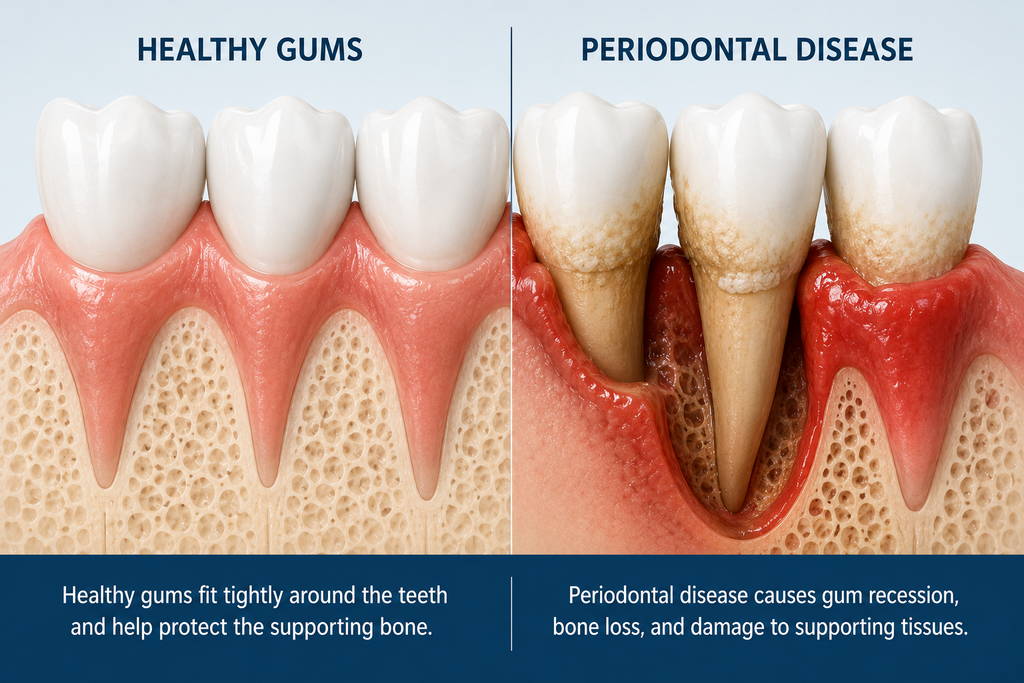
Periodontal disease, commonly known as gum disease, is a chronic bacterial infection and inflammatory condition that affects the gums and other structures supporting your teeth. It often begins as gingivitis, with symptoms such as bleeding, redness, and inflammation.
As periodontal disease progresses, the infection can extend below the gumline and damage the bone and connective tissues that support your teeth. Without appropriate treatment, advanced periodontal disease can eventually contribute to tooth mobility and tooth loss.
Signs of periodontal disease may include:
- Bleeding while brushing or flossing
- Persistent bad breath
- Red, swollen, or tender gums
- Gum recession
- Loose or shifting teeth
- Food frequently becoming trapped between teeth
- Tooth sensitivity
- Changes in your bite
- Difficulty or discomfort when chewing
Periodontal disease does not always cause significant pain in its early stages, which is one reason regular dental and periodontal evaluations are so important.
What Is LANAP®?
LANAP stands for Laser Assisted New Attachment Procedure. It is a minimally invasive periodontal treatment protocol designed specifically to treat gum disease using the PerioLase MVP-7 dental laser.
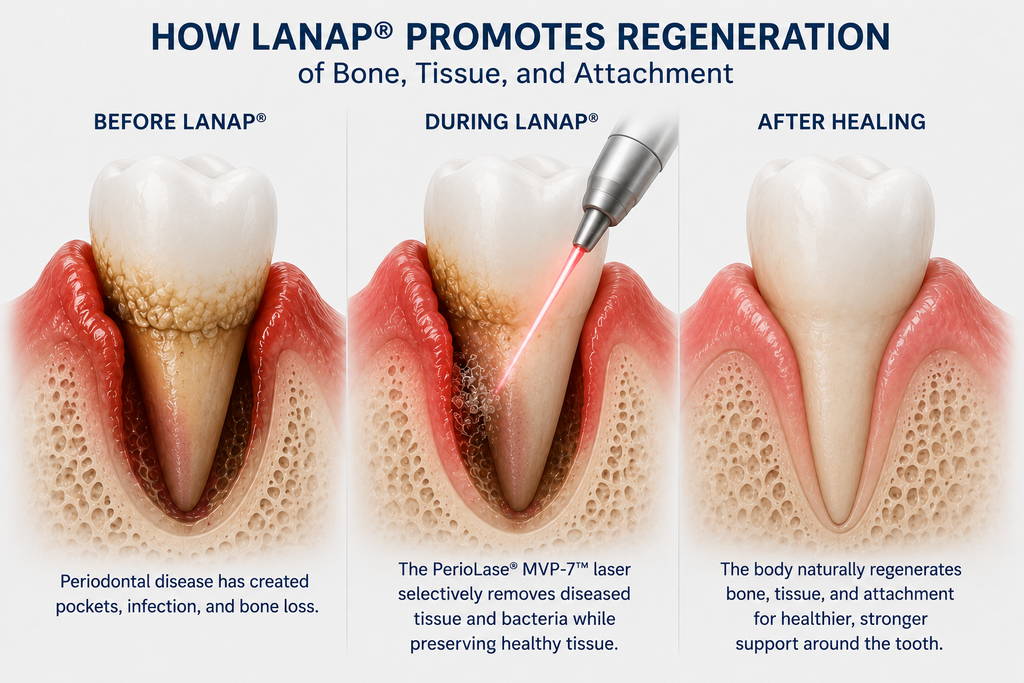
Rather than cutting away gum tissue with a scalpel, the LANAP Protocol uses precisely controlled laser energy to selectively remove diseased tissue and reduce disease-causing bacteria within periodontal pockets while preserving healthy tissue.
During treatment, the roots of the affected teeth are thoroughly cleaned to remove deposits and calculus. The laser is then used as part of a carefully defined protocol that helps create conditions for healing and reattachment of the tissues supporting the teeth.
Because LANAP does not require the traditional cutting and suturing associated with conventional periodontal surgery, many patients experience less bleeding, swelling, and post-treatment discomfort.
The PerioLase® MVP-7™ Difference
The PerioLase MVP-7 is a specialized Nd:YAG dental laser developed specifically for periodontal applications and for performing the LANAP Protocol.
Its wavelength allows the laser to selectively interact with diseased and pigmented tissue while helping preserve healthy surrounding tissue. It also targets bacteria associated with periodontal infection and plays an important role in the controlled healing process that follows treatment.
Potential advantages of LANAP treatment with the PerioLase include:
- No scalpels
- No sutures
- Minimal bleeding
- Less swelling
- Preservation of healthy gum tissue
- Reduced post-treatment discomfort for many patients
- Faster return to normal daily activities
- Regenerative healing potential
The PerioLase can also be used for other periodontal and soft-tissue applications, giving Dr. Golshani additional treatment options depending on each patient's individual needs.
More Than Repair: Periodontal Regeneration
One of the most significant differences between the LANAP Protocol and many other approaches to periodontal treatment is its regenerative potential.
When performed with the PerioLase MVP-7 according to the LANAP Protocol, its FDA-cleared indications include periodontal regeneration involving new cementum, new periodontal ligament, and new alveolar bone on a previously diseased root surface.
These structures make up the periodontal attachment apparatus that helps anchor your teeth within the jaw.
Rather than simply removing diseased tissue, LANAP is designed to create an environment that supports your body's natural healing response. For appropriate patients, this regenerative capability may provide opportunities to stabilize teeth and preserve their natural dentition.
Can LANAP Help Save Teeth Affected by Advanced Gum Disease?
In some cases, yes.
Every patient's situation is different, and no periodontal treatment can guarantee that every compromised tooth can be saved. The amount and location of bone loss, tooth mobility, infection, bite forces, overall health, and other factors all influence a tooth's long-term prognosis.
However, regenerative periodontal therapy may improve the outlook for some teeth affected by significant periodontal disease.
Dr. Ali Golshani carefully evaluates your periodontal condition, remaining bone support, tooth stability, bite, and overall oral health before recommending treatment. If there is a reasonable and predictable opportunity to preserve a natural tooth, that option will be considered before replacement.
When natural teeth can be maintained comfortably, functionally, and predictably, preserving them is generally the preferred goal.
LANAP vs. Traditional Gum Surgery
Traditional periodontal surgery can be highly effective and remains appropriate for certain conditions. It commonly involves making incisions in the gum tissue so the gums can be moved away from the teeth, allowing the dentist or periodontist to access and clean the affected areas. The tissue is then repositioned and sutured during healing.
LANAP approaches periodontal treatment differently.
The PerioLase laser allows diseased tissue and bacteria to be selectively targeted without the same type of surgical incisions. Healthy gum tissue can be preserved, and sutures are generally unnecessary.
For many patients, this can mean:
- Less bleeding and swelling
- Reduced post-operative discomfort
- No sutures
- Less gum recession associated with removing tissue
- A faster return to normal activities
- Regenerative healing potential
LANAP is not automatically the best treatment for every periodontal condition. The appropriate approach depends on the type and severity of disease, anatomy, overall health, and long-term prognosis. Dr. Golshani will discuss the advantages and limitations of your available options before recommending treatment.
What to Expect During LANAP Treatment
LANAP treatment begins with a comprehensive periodontal evaluation and diagnostic imaging. Dr. Golshani evaluates the depth of periodontal pockets, existing bone support, tooth mobility, bite forces, and other factors before developing a personalized treatment plan.
For many patients receiving full-mouth LANAP treatment, the primary procedure is completed over two appointments of approximately two hours each, with one side of the mouth treated at each visit.
During treatment, the PerioLase is used to selectively remove diseased tissue and reduce bacteria within the periodontal pockets. The tooth roots are thoroughly cleaned to remove calculus and deposits, and the laser is used again as part of the LANAP Protocol to help establish conditions that support healing.
Because treatment does not involve traditional scalpel incisions or sutures, patients are often surprised by how manageable the experience can be.
Recovery After LANAP
Recovery following LANAP is typically different from recovery after conventional periodontal surgery because there are no traditional incisions or sutures.
Some soreness or tenderness is normal after treatment, but many patients are able to return to work and other normal daily activities relatively quickly. Individual experiences vary depending on the extent of treatment and the severity of periodontal disease.
Dr. Golshani will provide specific post-treatment instructions, including temporary dietary recommendations and guidance for caring for the treated areas while healing occurs.
Periodontal maintenance is also an essential part of long-term success. Patients who have been treated for periodontal disease typically require more frequent professional maintenance than patients without a history of periodontal disease. A personalized maintenance schedule will be recommended based on your condition and response to treatment.

Who Is a Candidate for LANAP?
LANAP may be an option for patients with moderate to advanced periodontal disease, particularly those who have experienced periodontal pocketing, bleeding gums, bone loss, gum recession, loose teeth, or other signs of damage to the structures supporting their teeth.
You may want to ask about LANAP if:
- You have been diagnosed with moderate or severe periodontal disease
- You have experienced bone loss around your teeth
- Your gums bleed frequently
- You have deep periodontal pockets
- One or more teeth have become loose because of gum disease
- You have been told you may need periodontal surgery
- You are looking for a minimally invasive periodontal treatment option
- You want to explore whether compromised natural teeth can be preserved
A comprehensive periodontal examination is necessary to determine whether LANAP is appropriate for your specific condition.
What About Gum Disease Around Dental Implants?
Periodontal-type infection can also develop around dental implants, a condition known as peri-implantitis. If left untreated, inflammation and infection around an implant can damage the bone and tissues supporting it.
The PerioLase MVP-7 is also used in a specialized protocol known as LAPIP™ (Laser Assisted Peri-Implantitis Procedure), which is designed to treat certain cases involving ailing or failing dental implants.
LANAP and LAPIP are separate protocols for different clinical situations. If you are experiencing bleeding, inflammation, discomfort, or bone loss around a dental implant, Dr. Golshani can evaluate the area and determine which treatment options may be appropriate.
Why Choose Serene Hills Dentistry for LANAP?
Successful periodontal treatment begins with an accurate diagnosis and a treatment plan built around the individual patient—not simply the technology being used.
Dr. Ali Golshani has incorporated the PerioLase MVP-7 into Serene Hills Dentistry to provide patients with an advanced, minimally invasive option for treating periodontal disease and preserving natural teeth.
Every treatment plan begins with a comprehensive examination and an honest discussion of your options. Depending on your condition, the appropriate treatment may include nonsurgical periodontal therapy, LANAP, another periodontal procedure, or referral to a periodontist when specialized care is appropriate.
If a tooth cannot be predictably preserved, Serene Hills Dentistry also offers comprehensive dental implant treatment to rebuild function and appearance. But when a natural tooth has a reasonable long-term prognosis, preserving it remains the first priority.
Patients from Lakeway, Lake Travis, Bee Cave, Spicewood, Dripping Springs, Austin, and surrounding Texas Hill Country communities can receive advanced periodontal care close to home.
FAQs About LANAP® Gum Disease Treatment
Schedule a LANAP Consultation in Lakeway
If you've been diagnosed with periodontal disease, told you need gum surgery, or are concerned that you may lose one or more teeth because of gum disease, you may have additional treatment options. Dr. Ali Golshani can evaluate the health of your gums, bone, and teeth and determine whether LANAP or another periodontal treatment is appropriate for you.
You may have more options than you think.
Discover how the PerioLase MVP-7 and LANAP Protocol may help control periodontal disease, support healing, and preserve your natural teeth at Serene Hills Dentistry in Lakeway, Texas. Schedule a consultation to learn whether LANAP may be appropriate for you.