

Root Canals
When a tooth becomes infected, it is usually related to the nerves and soft tissue inside the root of the tooth. This inner tissue, called the pulp, can become inflamed or infected because of deep decay, a crack in the tooth, repeated dental treatment, or an injury.
If the infection is left untreated, it can spread and turn into an abscess, which may cause more serious problems beyond the tooth itself. Root canal treatment is designed to remove the infected tissue, clean the inside of the tooth, and help preserve your natural tooth whenever possible.
During a root canal, the area around the tooth is numbed with local anesthetic to keep you comfortable. The infected tissue is removed, the canals of the tooth are carefully cleaned, and the space is filled with a dental material called gutta percha. In many cases, a crown is recommended after treatment to protect the tooth and help prevent it from breaking.
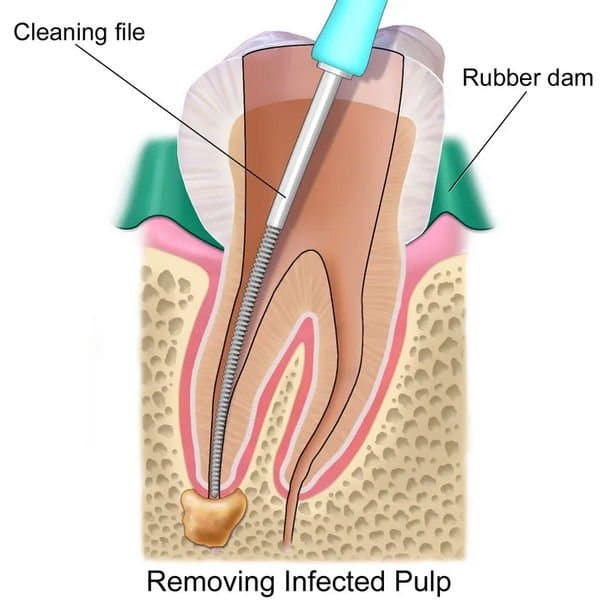
Root canal treatment has a reputation for being intimidating, but modern dental techniques and anesthetics have made the procedure much more comfortable than many patients expect. In most cases, root canal treatment can relieve the pain caused by infection and allow you to return to eating, chewing, and smiling comfortably again.
Sometimes, even teeth that are badly broken down can be restored with posts and crowns, helping you avoid an extraction. Dr. Ali will evaluate your tooth, symptoms, and X-rays to help determine the best course of treatment for your situation.
Advanced Root Canal Treatment with GentleWave®
At Serene Hills Dentistry, we use advanced dental technology to make root canal treatment as thorough, conservative, and comfortable as possible. One of those technologies is the GentleWave® Procedure.
GentleWave® is a modern root canal treatment option designed to clean the complex spaces inside the tooth more effectively than traditional methods alone. The root canal system is not always simple or straight. Many teeth have small branches, curves, and microscopic spaces where bacteria, tissue, and debris can remain.
The GentleWave® Procedure uses advanced fluid dynamics and multisonic energy to help clean these difficult-to-reach areas of the root canal system. This allows for a less invasive approach that can help preserve more of the natural tooth structure while still supporting a deep cleaning of the infected area.
For many patients, GentleWave® may allow root canal treatment to be completed efficiently while helping support comfort, cleanliness, and long-term tooth preservation. Every tooth is different, so Dr. Ali will determine whether GentleWave® is appropriate after evaluating your specific case.

What to Expect with GentleWave® Root Canal Treatment
Before root canal treatment begins, the tooth and surrounding area are numbed with local anesthetic to keep you comfortable. Once the area is numb, Dr. Ali will access the inside of the tooth and remove the infected or inflamed tissue.
When GentleWave® is used, advanced fluid dynamics and multisonic energy help clean the root canal system, including small branches, curves, and hard-to-reach spaces that traditional methods may not fully access. This minimally invasive approach is designed to thoroughly clean the inside of the tooth while helping preserve more of your natural tooth structure.
After the tooth has been cleaned and disinfected, the canals are filled and sealed. Depending on the condition of the tooth, a crown may be recommended to strengthen and protect it long-term.
Some soreness after root canal treatment is normal, but it is usually temporary. Most patients are able to return to normal daily activities shortly after the procedure, following the specific instructions provided at their appointment.
FAQs
Schedule a Root Canal Evaluation in Lakeway
Tooth pain, lingering sensitivity, or swelling are signs it's time to have a tooth evaluated. At Serene Hills Dentistry, we offer GentleWave® technology for thorough root canal treatment that helps save your natural tooth. Contact our Lakeway office to schedule an evaluation, serving patients from Bee Cave, Lake Travis, and nearby communities.