

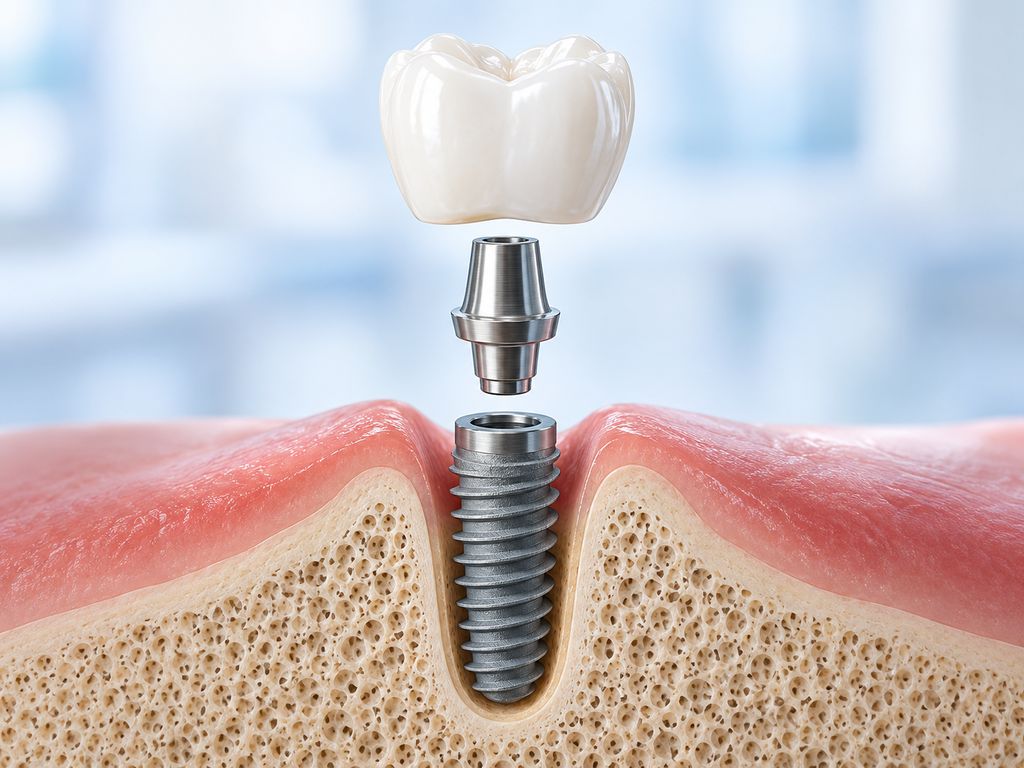
When someone says “dental implant,” they may mean the entire replacement tooth. Technically, the implant is the part placed in the jawbone. A single replacement tooth usually has three main parts: the implant body beneath the gum, a connector called an abutment, and the visible crown. Understanding what each part does can make treatment options easier to discuss with your dentist.
The Three Parts of a Single-Tooth Implant
1. The implant body replaces the tooth root. This small, biocompatible post is placed in the jawbone where a tooth is missing. Titanium is commonly used for dental implants. Over time, the surrounding bone heals around the implant in a process called osseointegration, creating support for the replacement tooth.
2. The abutment connects the implant to the restoration. The abutment attaches to the implant and extends above the gumline so it can support a crown. Depending on the treatment plan, it may be placed when the implant is placed or at a later visit after healing.
3. The crown is the part that looks like a tooth. For a single missing tooth, a custom crown is designed to fit your bite and blend with your smile. The implant supports the crown, while the abutment connects the two. Your dentist selects the restoration and attachment method for your particular case.
That distinction matters: an implant is more than a crown, and a crown placed on a natural tooth is different from one supported by an implant.
How Does the Implant Become a Stable Replacement Tooth?
Implant treatment begins with an examination and imaging to evaluate the area where the tooth is missing. After the implant is placed, the bone needs time to heal around it. The amount of healing time and the sequence of visits vary; some patients may receive a temporary tooth during the process, while others wait until the implant is ready for its final restoration.
Once the implant is ready to be restored, the abutment and custom crown complete the replacement tooth. The finished result is designed to let you chew and speak comfortably, but its long-term health also depends on the gum and bone around it.
For a fuller discussion of candidacy, planning, placement, and restoration at our Lakeway practice, see our Dental Implants page.
What If More Than One Tooth Is Missing?
The three-part example above describes a single implant-supported crown. When several teeth are missing, implants may instead support a bridge or help stabilize a denture. The number and position of implants, the type of restoration, and whether preparatory care is needed depend on the health of your mouth and your treatment goals. Replacing several teeth does not necessarily require one implant for every missing tooth.
Caring for the Implant and Its Restoration
The crown cannot develop a cavity, but plaque and inflammation can affect the tissues that support an implant. Daily cleaning around the restoration and regular professional visits help your dental team monitor both the replacement tooth and the surrounding gum and bone. Your dentist or hygienist can show you which flossing or interdental tools are appropriate for your specific restoration.
If you notice persistent bleeding, swelling, discomfort, or a change in how the restoration feels, contact your dentist for an evaluation. Do not assume that an implant is maintenance-free because its crown is artificial.
Dental Implant Parts FAQs
Is a dental implant the same thing as a crown?
No. The implant body is placed in the jawbone, while the crown is the visible replacement tooth. An abutment commonly connects the implant and crown in a single-tooth restoration.
Does the abutment go in at the same time as the implant?
It can, but the timing depends on the treatment plan. In other cases, the abutment is placed after the implant has healed and integrated with the bone.
How long does it take before the final crown is attached?
The timing varies with healing and the type of restoration. Your dentist will assess when the implant is ready for its final crown; some patients may have a temporary tooth in the meantime.
Can implants support a bridge or denture instead of a single crown?
Yes. Implants can support a bridge for several missing teeth or help retain a denture for more extensive tooth loss. The right design depends on your oral health, available bone, and goals.
Learn More About Dental Implants in Lakeway
Understanding the parts is a useful first step, but the right replacement depends on your own teeth, gums, and jawbone. Dr. Ali Golshani provides implant placement and restorative care at Serene Hills Dentistry in Lakeway. Explore our Dental Implants page to learn about treatment options and request an evaluation.